
Like most people my age I learned about The Holocaust in grade school. I was then introduced to a variety of TV mini-series (Holocaust, Winds of War) and movies (Judgment at Nuremberg, Schindler’s List) over the years, that further brought the magnitude of this genocide to light. It was after I read The Rise and Fall of the Third Reich, did another perspective present itself – the industrialization of the atrocities.

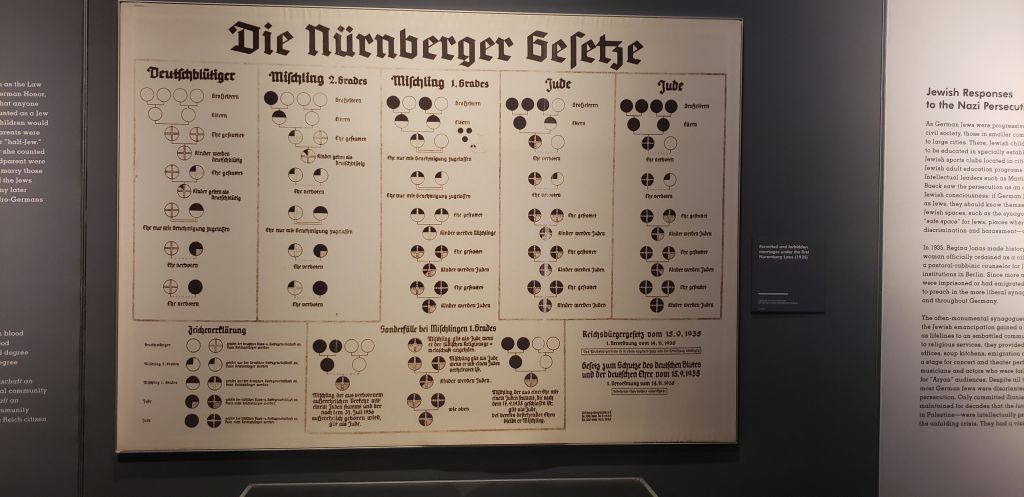
The exhibition I attended yesterday in Boston “Auschwitz. Not long ago. Not far away.” presented history leading up to 1930s Germany, the time of The Holocaust itself, the liberation, and what a post-World War looked like for those that survived. I don’t think anyone who has studied this time period can fully wrap their heads around how this was allowed to happen in the first place. How could an industrialized modern society systematically allow such horror to exist? It’s one thing when we feel for that one person who was executed just because of who they were, but to try to understand the millions that followed the same fate—the answer escapes us. It would be the same as trying to understand if there is an end to the universe—some things, like The Holocaust, are simply incomprehensible. Yet, we try. Because the alternative is to forget. As Spanish philosopher George Santayana said, “Those who don’t know history are destined to repeat it.”
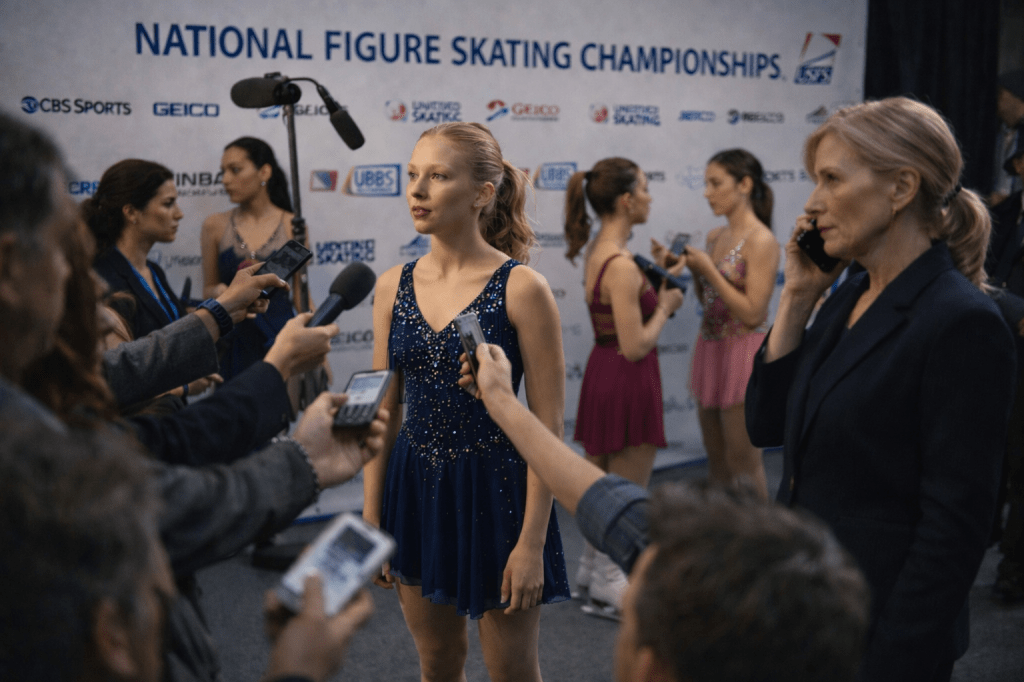
Those who follow my work may have noticed some of the messaging I have incorporated into the storylines that may remind viewers about a history that should never be forgotten. As writers, we are influenced by what we have seen and read. If we choose to write in a certain way or genre, we will bring in a narrative that may give the viewer a moment of thought or reflection on a subject. So when they are reading about a particular subject, they may remember a film (or book) that addressed it indirectly without being obvious. Sometimes, in my view, subtlety is a great communicator.

But this all being said, I thought the exhibition presented a complete 360-degree view of the subject. The curators of this exhibition truly had their work cut out for them, but they did it with reverence, grace, sophistication, and design that not only fully immersed the visitor, but educated them along the way. The over 700 artifacts created a narrative that moved the visitor throughout the history of a tragedy that we must all hope…and pray…never repeats itself.

What I found particularly moving were the interviews with the survivors and their optimistic view of a better future. To offer hope when the world they were in was hopeless. To offer the spirit to live when their plight was lifeless. To offer a new way to look at tomorrow, when they thought there were none. For if those who have suffered so much can look towards a future of better days—that’s a day worth living for.
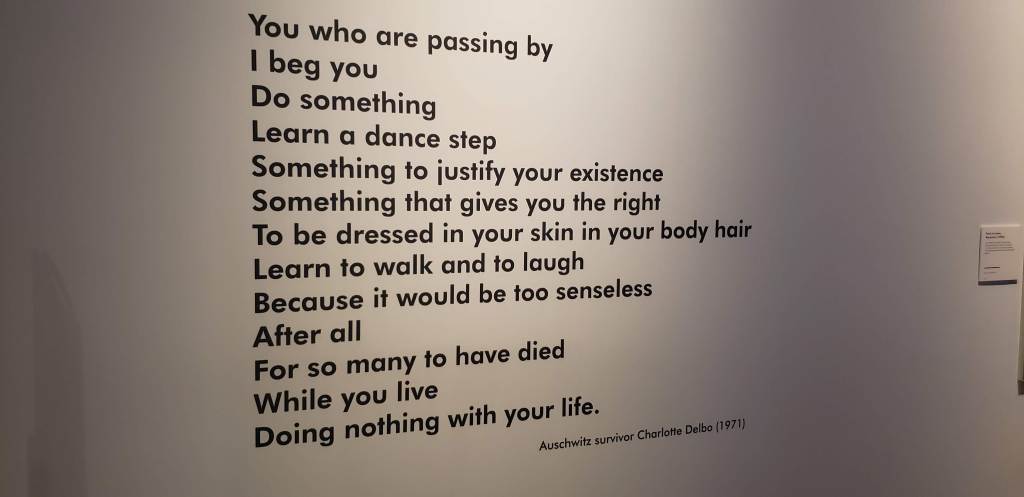
I leave you with the following quote:

 The Ashton Times
Leave a comment