
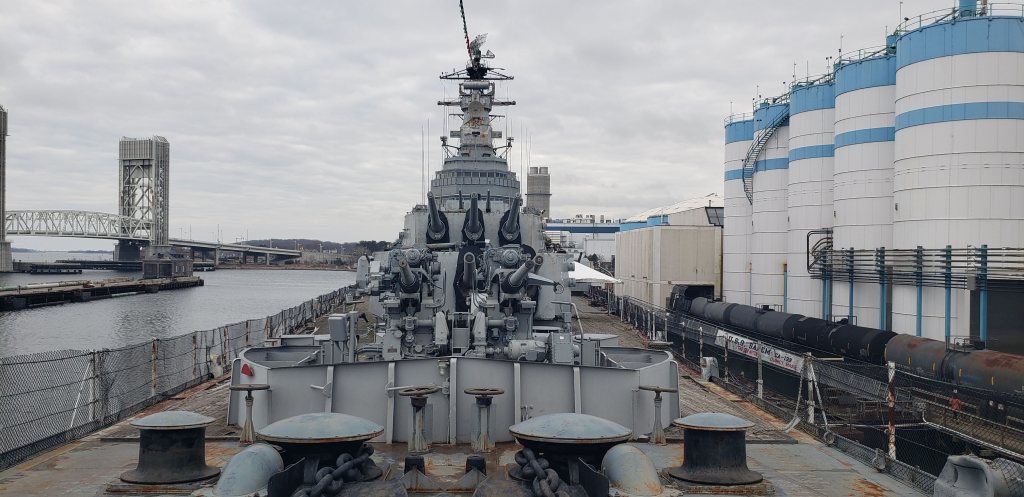
Last weekend my friend Dan Groom and I toured the USS Salem. A Des Moines-class heavy cruiser, the Salem was one of three in her class and is thankfully preserved as a museum ship in Quincy, Massachusetts. Although I’ve toured the Salem in the past, last weekend was special as we were given a four-hour personalized tour by one of the volunteers. The ship is normally closed this time of year but was open for the Army Navy Game that weekend.
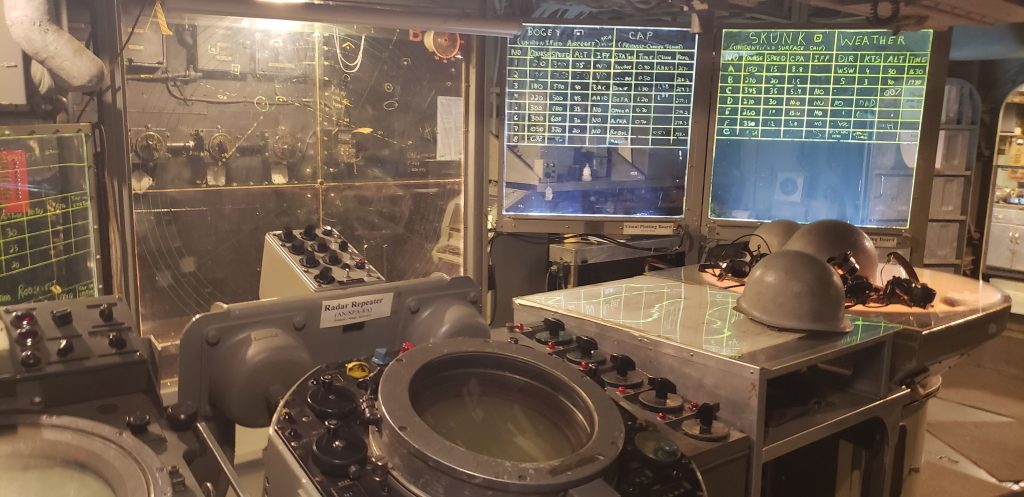
For those of you who follow this blog, I have long been interested in museum ships and always take the opportunity for a day trip whether it be local or while on holiday. What’s important about the preservation of these ships is the history they represent and the era in which they operated.
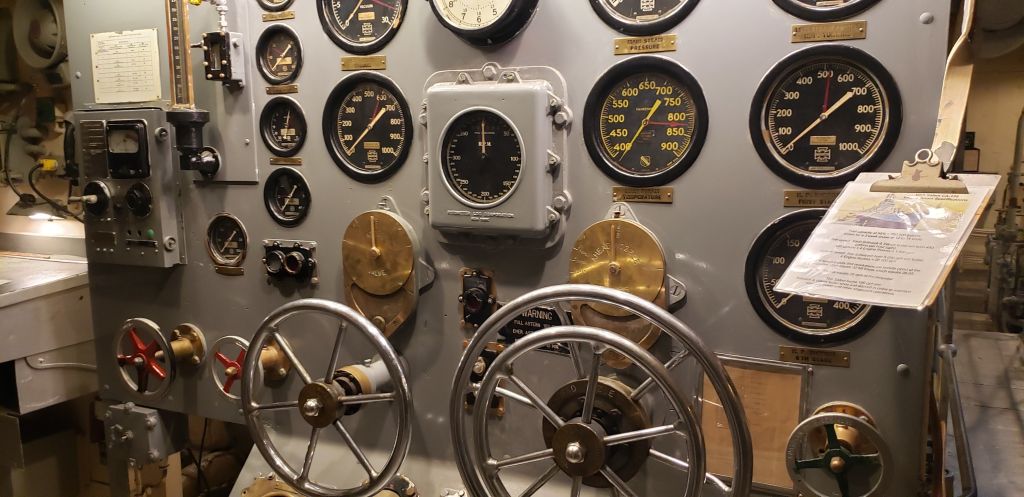
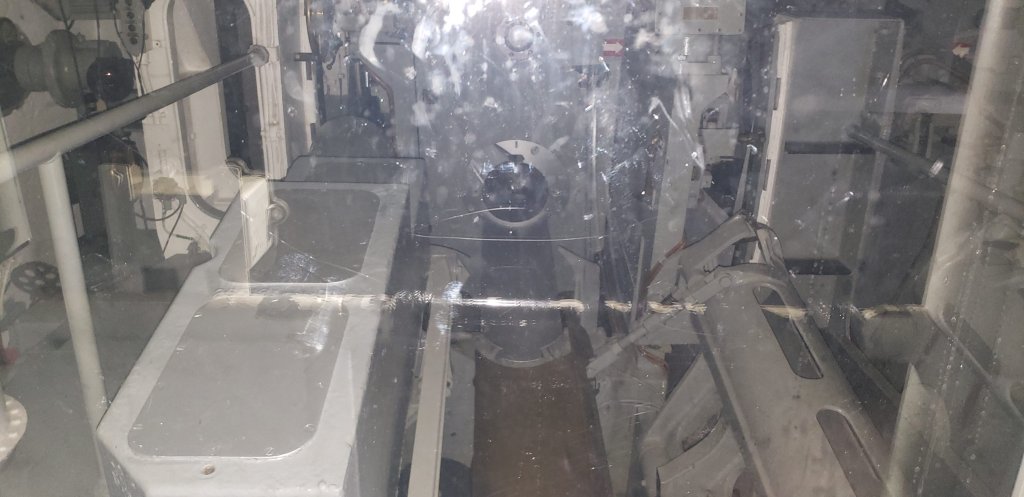
Although Salem was laid down in 1945 and wasn’t commissioned until 1949, it was clear that this technological marvel was born during the necessity of World War II. Her automatic loading main guns alone would have made her a formidable opponent against any adversary. Serving as flagship of the 6th Fleet in the Mediterranean, along with service in the Atlantic and training exercises at Guantanamo Bay, Cuba, the Salem was decommissioned in 1959.
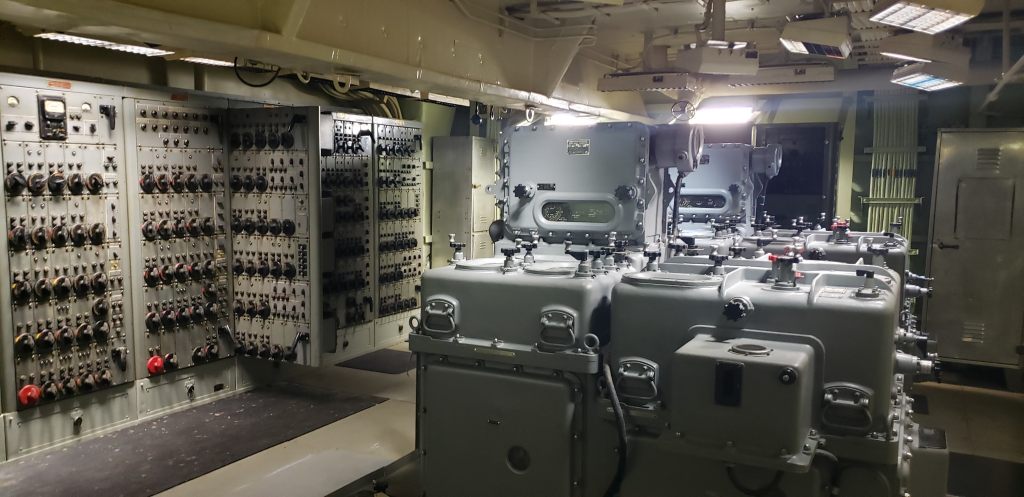
What struck me the most about our tour was the level of detail that was offered by one of the volunteers. He just didn’t point out what something was, but how it operated and fit into the overall operations of the ship. This volunteer (unfortunately, I don’t remember his name) went out of his way to fully introduce the Salem and its features. To say he took pride in the ship, would be an understatement. Suffice it to say, Dan and I were both thankful for the outstanding tour.
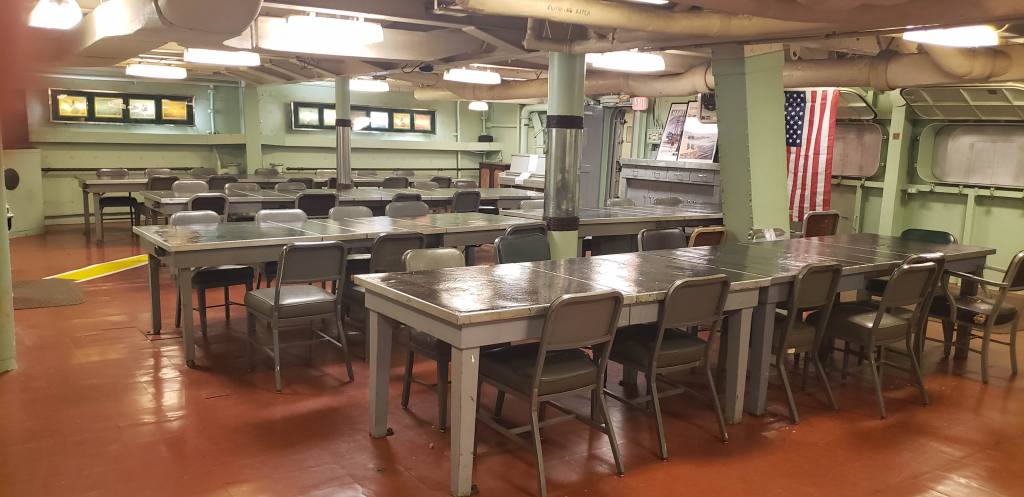
Another thing I have always liked about the Salem is the organization of its interior spaces. Although I love visiting the USS Massachusetts, that battleship is truly a maze, compared to the USS Salem. Some years ago, another friend and I visited the Salem during Halloween when the museum contracted with a “Haunted House” type of attraction. It was truly a terrific event (that scared the hell out of me!) that worked well given the layout of the ship.
What’s important at this stage of the Salem (and other museum ships) is public support. These vessels represent a time in history that can’t be replicated in a standard museum with four walls and a roof. When you visit these ships, you are walking through history along with all those that served. Considering these “museums” sit in salt water and are exposed to the elements (particularly the harsh weather in the Northeast), one can only imagine the associated costs of maintenance against the revenue from ticket sales.
Remember, a visit to a museum ship isn’t just about walking decks, it’s the preservation of history.
Next visit.




 The Ashton Times
Leave a comment