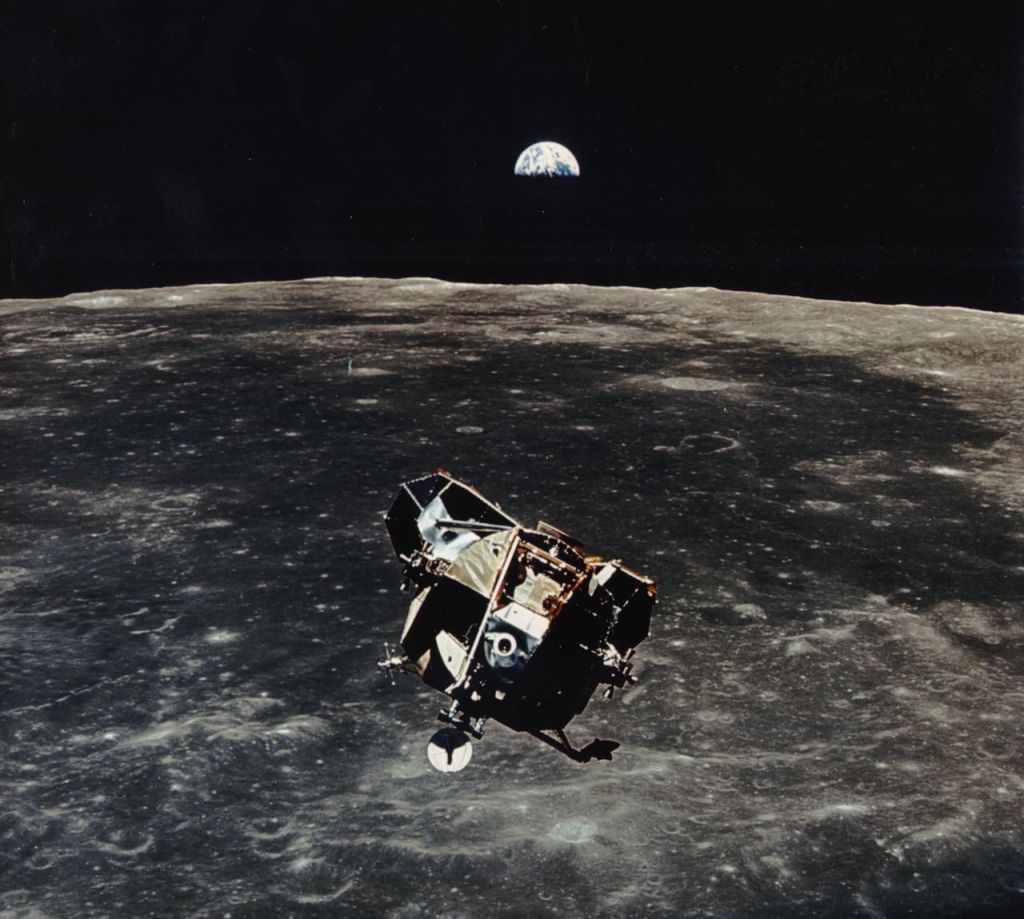
Fifty-four years ago on July 16, 1969, Apollo 11 blasted off for the Moon. I was only four years old at the time, so I obviously don’t remember the liftoff or the historic landing on July 20, but what was conveyed to me through that time was the excitement that anything was possible. Here mankind was turning science fiction into science fact. And through the efforts of the thousands of scientists and engineers across the United States that put men on the Moon, was the birth of new technologies. Technologies that are now part of our everyday existence.
We know from history that great leaps in technology were born from collective efforts. We saw this during two world wars and the cold one. Whether peace or war, mankind has proved over and over again what it’s capable of when it sets its collective mind to something.

Perhaps one of the greatest technological achievements during WWII was the atomic bomb. It’s easy for those of us in the present to have an opinion on whether it should have been dropped. Having read several books on the subject and on WWII in general, I have never wavered in my position that the dropping of the bombs not only saved lives in the end but shortened a war that had to end. I firmly believe that because we know the aftermath of what happens when a nuclear device is dropped, is precisely why it hasn’t been used since in the theatre of war. Because, unlike WWII, many other nations now possess nuclear weapons. It is believed that to use those devices again in conflict would cross the Rubicon—that point of no return.

But we also know the great advantages of nuclear energy, from a clean, reliable energy source, to powering our military, to nuclear medicine procedures. Even NASA and DARPA are looking at a nuclear-powered rocket to ferry astronauts from Earth to Mars. This is not a new thought from those organizations. It was first considered in the 1950s as Project Orion.
Next week, Christopher Nolan’s Oppenheimer will hit theatres in the United States. If any filmmaker can dramatize this story to the public, it’s Nolan. By far, he is the contemporary filmmaker I admire the most. Not because he produces the most films, but because he produces quality films with deep storylines. He takes the time to develop a story. He never rushes. You know a film is of quality when you can watch it over and over again and learn something new every time.

I watched Nolan’s Interstellar again last week and was just blown away by the detail. Yes, there is what I call the top layer of the story that is aimed at satisfying the masses. But then there are the various subplots and character dynamics that truly make the film shine. Add to all this, the realism he creates in space and time travel and it really is a must-watch for those who love science fiction combined with an epic story. I have a feeling Oppenheimer will deliver the same.
Since my last post, I have started the submission process to select agents for SOS United States. One thing I know is this isn’t a race on how many I can submit to all at once but taking the time to submit to a quality handful and waiting for a response. And while SOS United States is now waiting for others, I’m nearly halfway through revisiting First Report. Because if the last quarterly report from First Signal’s distributor is any indication, a new franchise is about to be launched.
Pad 39.




 The Ashton Times
Leave a comment