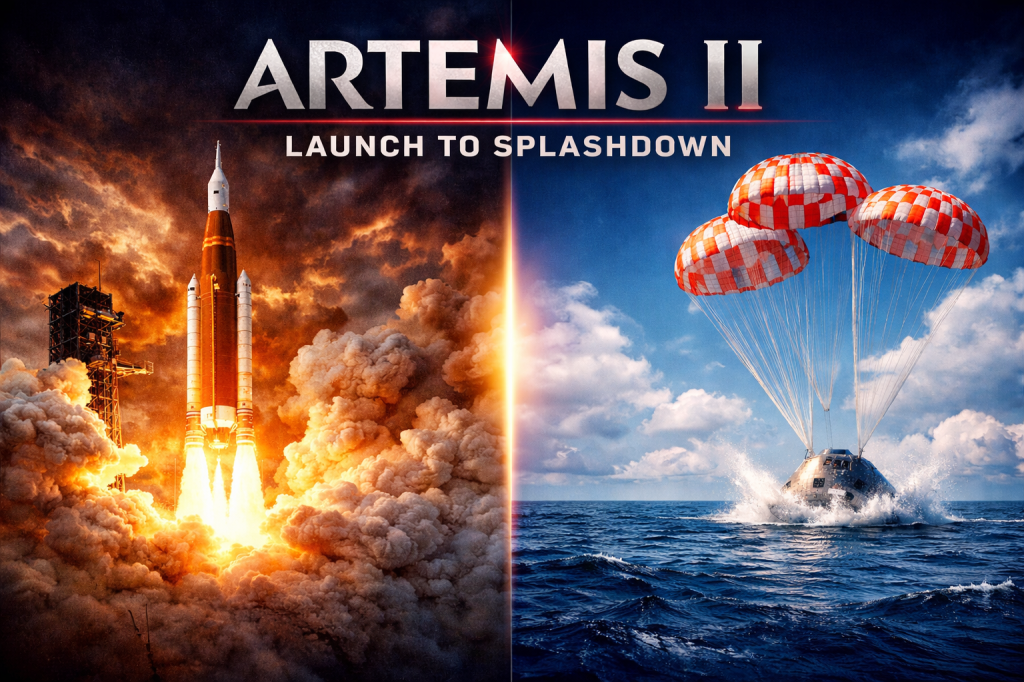
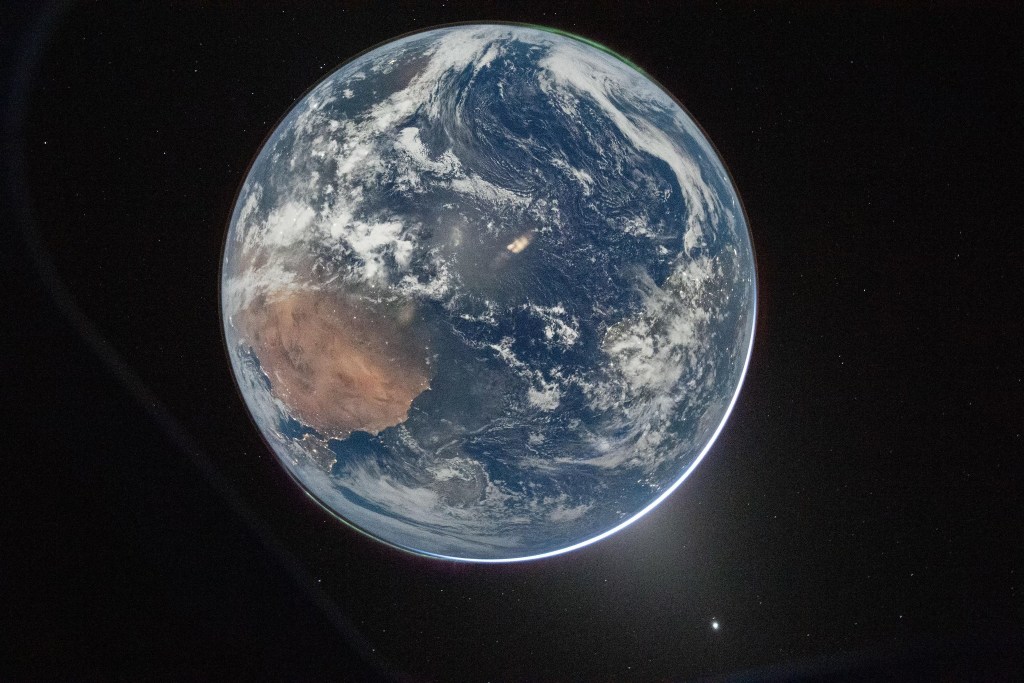
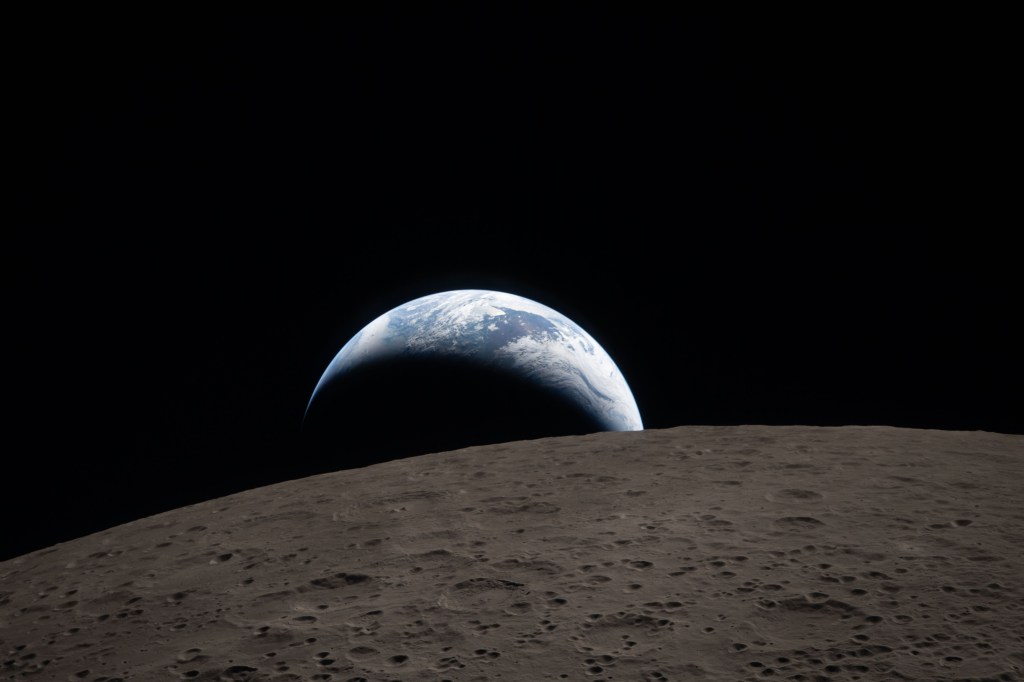
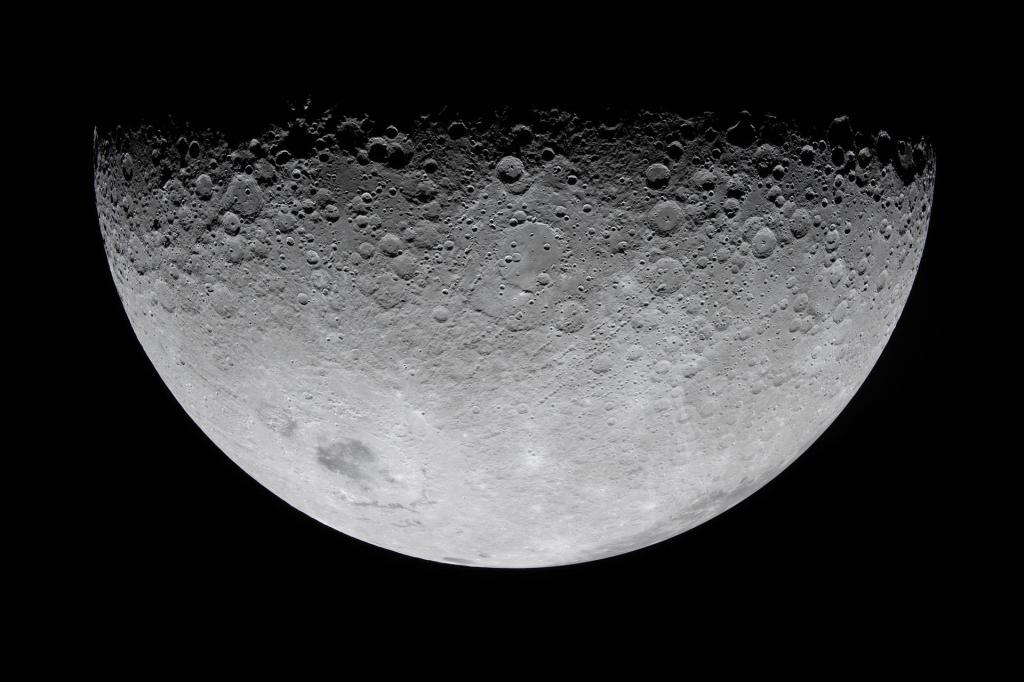
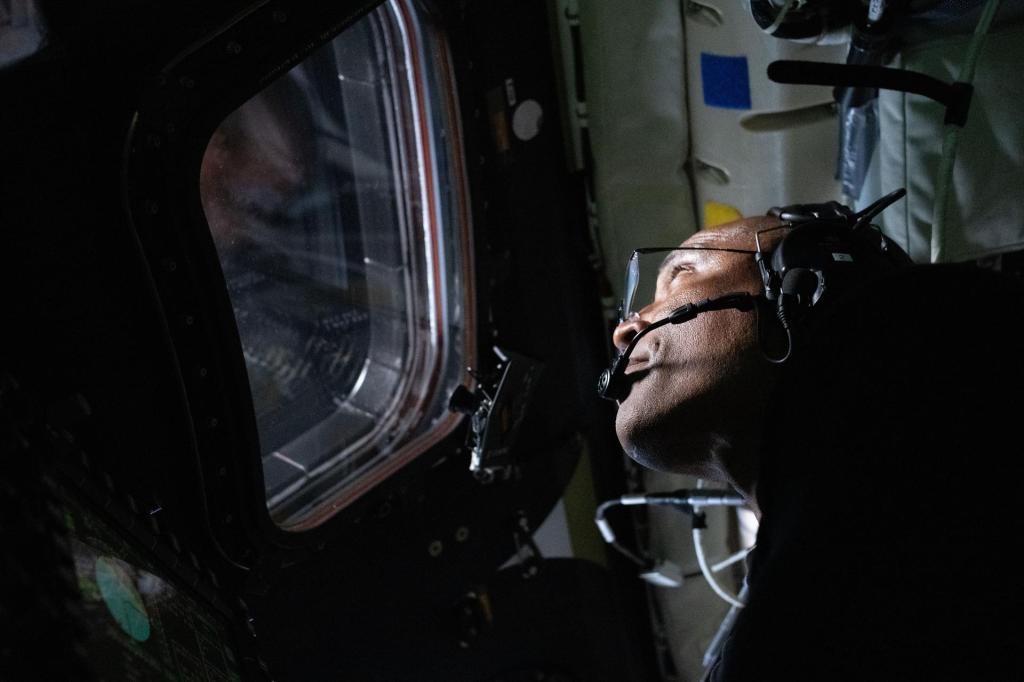
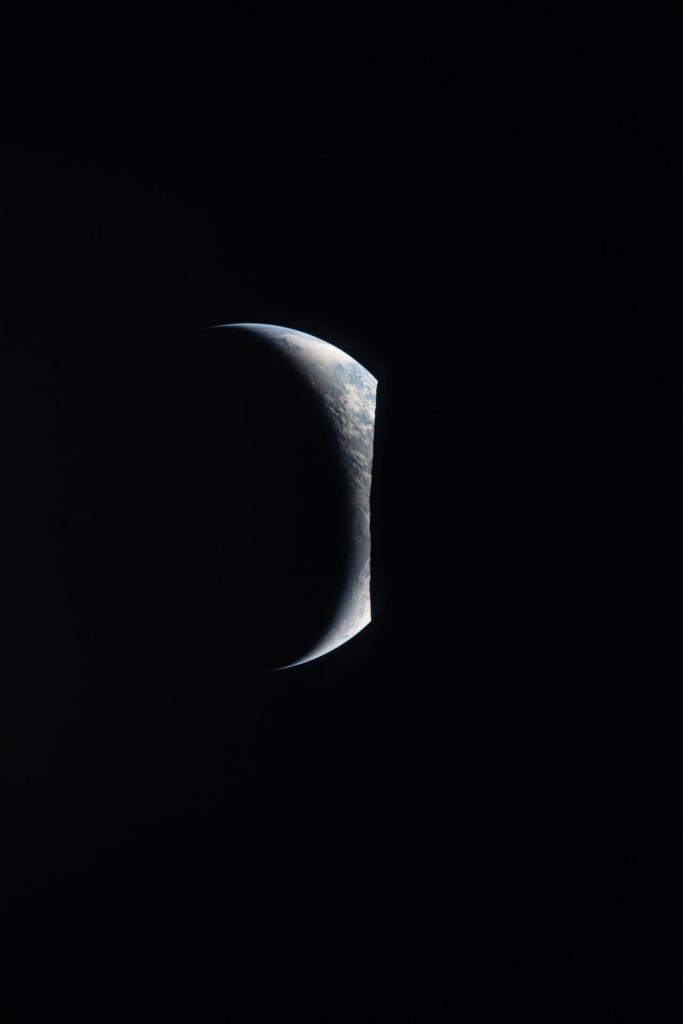
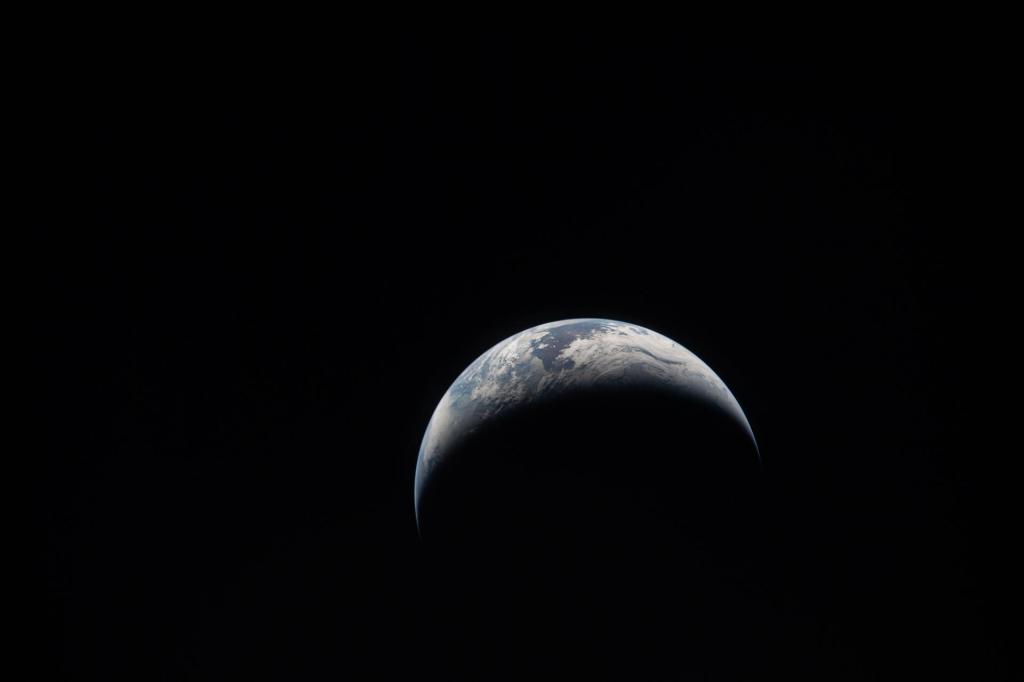
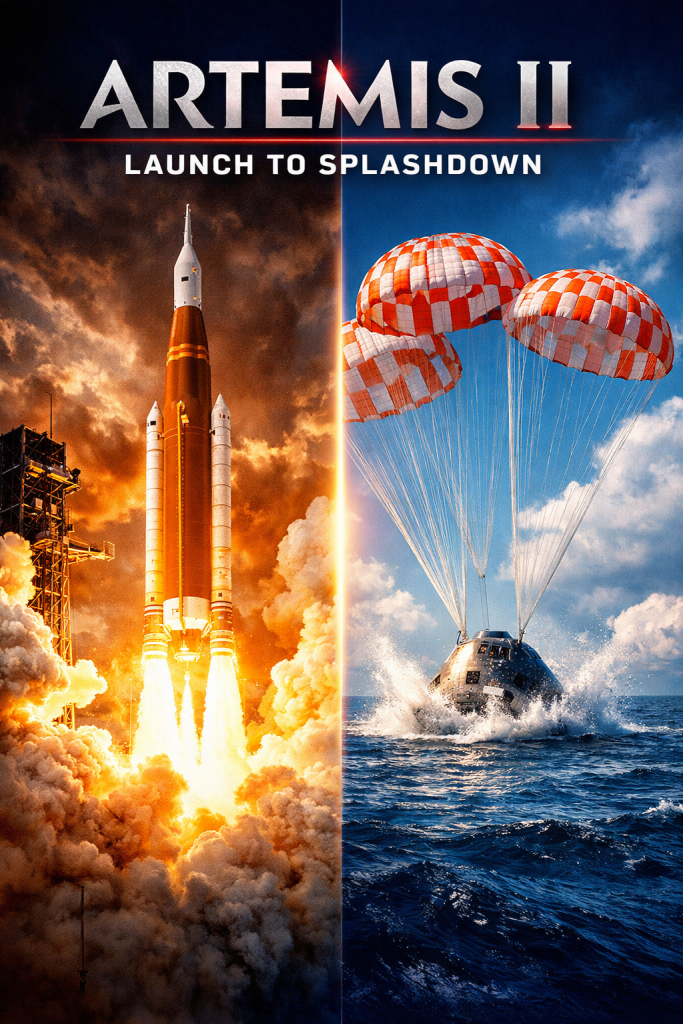
Every week, I leave for the gym at 5 AM. But this week was different. This past week, Artemis II was on its way to the Moon. It’s a space mission NASA hasn’t performed since Apollo 17 in 1972. With the Moon visible in the night sky and generally favorable weather, I found myself looking up every morning, wondering about this historic mission. Somewhere between Earth and the Moon, four astronauts were in a space vehicle the size of two minivans combined, taking mankind farther into space than any previous mission. After an epic journey around the Moon, the Orion space capsule splashed down safely in the Pacific Ocean at 8:07 PM on April 10.
Ever since I watched the later Apollo missions in the early 1970s, I have been enraptured by the space program. From the sheer capabilities involved in launching a spacecraft to the technological advances civilization has enjoyed because they were either invented or perfected for the space program, NASA has been responsible for projecting what we, as a species, are truly capable of. Sending a human off the planet into space and returning them safely to Earth was enshrined in history by the late President Kennedy when he stated to a Joint Session of Congress in 1961, “I believe that this nation should commit itself to achieving the goal, before this decade is out, of landing a man on the moon and returning him safely to the earth.”
While I have seen the Space Shuttle land and have visited the Kennedy Space Center on two occasions, I have yet to witness a live rocket launch. It’s easy to understand what inspires people to pursue a career in the space program. When you see vehicles such as the shuttle or a Saturn V rocket (Apollo/Saturn V Center), you can’t help but appreciate the inspiration to accomplish such feats of engineering and the pride in one’s country that can harness the intelligence and willpower necessary to achieve what was only envisioned in science fiction movies (Destination Moon).
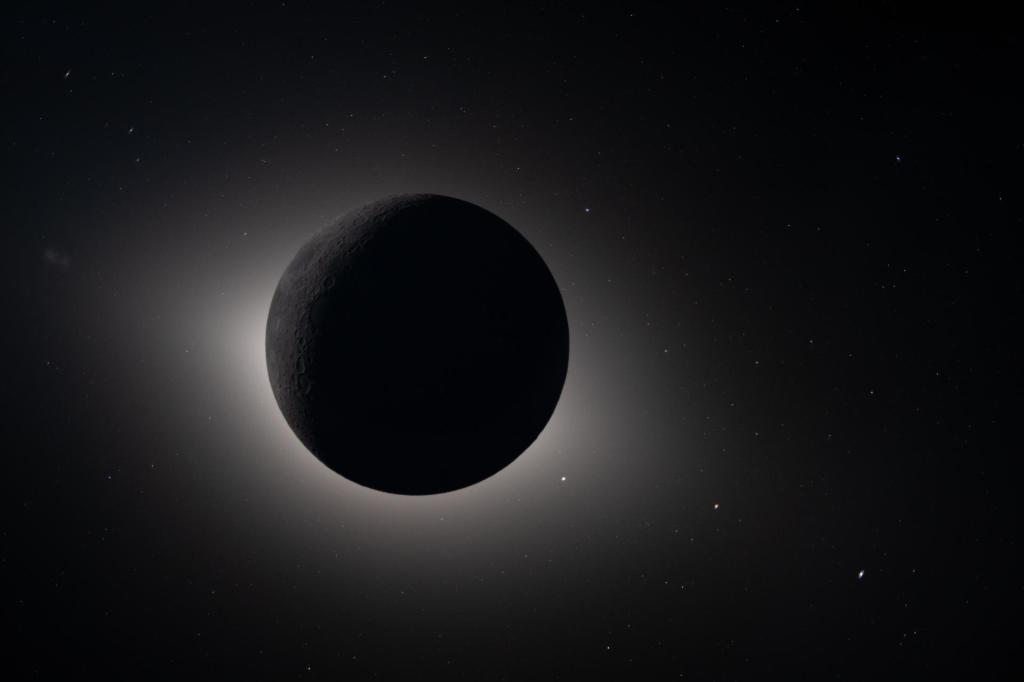
The Artemis missions will continue, with Artemis III scheduled for a mid-2027 launch, during which they will test two landers, one from SpaceX and the other from Blue Origin. From there, NASA plans to launch Artemis IV in early 2028, which will return humanity to the Moon’s surface. Artemis V is planned for the end of 2028, with annual missions thereafter, with the goal of building a Moon base. It would be grand if they called it Moon Base Alpha after the TV series Space: 1999!
While I don’t foresee myself traveling into space (never say never!), I have channeled my fondness for the space program into fiction. When I created and launched the First World Universe with First World in 2007 and First Signal in 2021, I blended science fact with science fiction to tell a story that has now been watched by millions worldwide.
Whether one is part of the science fact or fiction community, one thing I have realized over the years is that we all imagine the impossible and either accomplish it with an actual space launch or write about it in such a way that it becomes believable. For as long as mankind has imagined what’s on the other side, whether it’s Leif Erikson discovering North America or writer H.G. Wells theorizing the internet, there is virtually no limit to what’s possible.
Thank you to the Artemis II crew and to the thousands of ground crew and scientists who made such a mission possible. In a world of conflict and challenges, all of us can look to space with hope and be…
Inspired.



 The Ashton Times
Leave a comment